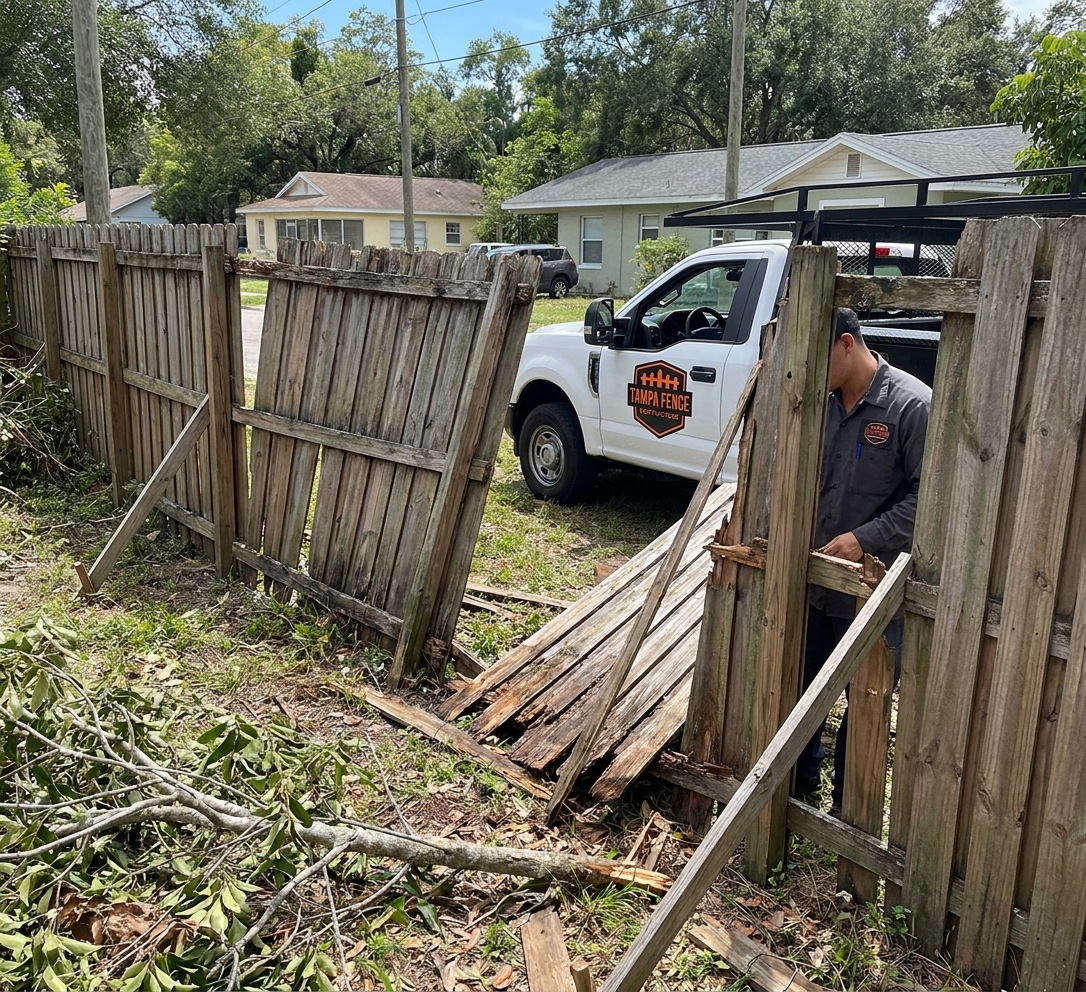
Before the Storm: What to Check
1. Inspect Post Stability
Walk your fence line and gently push on a few posts, especially older ones. Any noticeable give usually means the concrete footing has weakened over time, and that's the point most likely to fail in high wind — not the panels themselves. A leaning or loose post is worth having assessed before storm season, not during it.
2. Secure or Remove Loose Elements
Detachable gate panels, decorative fence toppers, or anything not permanently fastened should be secured or brought inside ahead of a storm. Loose hardware becomes a projectile risk in high wind well before the main fence structure is threatened.
3. Clear Debris and Overhanging Limbs
Dead tree limbs overhanging a fence line are a common cause of storm damage that has nothing to do with the fence's own construction quality. Trimming back anything that could fall on the fence line is one of the most effective things a homeowner can do ahead of hurricane season.
4. Know Your Fence's Age and Condition
An older wood fence with wood that's already softened from rot is far more likely to fail than a newer, well-maintained one, regardless of the storm's actual intensity. If your fence is showing signs of age, our fence repair & replacement team can assess it before storm season rather than after.
Why Posts Fail Before Panels Usually Do
A solid privacy panel catches significant wind load, and that force transfers directly to the post and its footing. If a post was set shallow, or in concrete that's cracked or degraded over years of Florida heat and moisture cycles, it becomes the weak point long before the panel material itself gives out. This is exactly why we set every new post at a depth built for our regional wind load rather than a minimum-code shortcut, and why open styles like aluminum picket or chain link — which let wind pass through instead of catching it — often come through a storm with less damage than a solid wood or vinyl privacy fence on the same property.
After the Storm: What to Do
Photograph any damage immediately, before you touch or move anything, for insurance purposes. Many homeowners policies do cover storm-related fence damage, though coverage and deductibles vary by policy, so contact your insurer directly to confirm what applies to your situation — we're not able to give insurance advice, only fencing advice. Once documented, we inspect the fence line and recommend a repair over a full replacement whenever the posts are still structurally sound, which is usually the more cost-effective path. If posts have failed, a full section replacement is typically the right call rather than patching around a compromised footing.
PAA: Hurricane Fence Protection Questions
What part of a fence fails first in a hurricane?
Posts, not panels, are usually the failure point. If a post's concrete footing wasn't set deep enough or has weakened over time, high wind load on a solid panel can lean or snap the post before the panel material itself gives way.
Should I take my fence down before a hurricane?
For most standard residential fences, no — a properly installed fence with adequately deep post footings is built to handle our regional wind loads. Removing loose gate panels or storing detachable sections is reasonable prep, but a well-built permanent fence generally doesn't need to be dismantled.
Does homeowners insurance cover fence damage from a storm?
Many homeowners policies do cover storm-related fence damage, but coverage details, deductibles, and wind-vs-flood distinctions vary by policy. Document the damage with photos immediately and contact your insurance provider directly to confirm what your specific policy covers.
Storm Damage? We Can Help
Whether it's a pre-season inspection or post-storm repair, we're ready to help. Request a free estimate here or call (813) 803-6881 for faster response after a storm.
Also see: Wood vs. Vinyl vs. Aluminum Fencing and Fence Repair & Replacement